AI ხელსაწყოები, როგორიცაა Cursor და Lovable, ხშირად ერთმანეთში ერევათ, მაგრამ მათი ერთდროულად გამოყენება აშკარას ხდის, რომ ისინი აგებულია სამუშაო დღის ძალიან განსხვავებული მომენტებისთვის. ერთი ცხოვრობს კოდში. მეორე ცხოვრობს იდეის სტადიაზე, სადაც ყველაფერი ჯერ კიდევ მოუწესრიგებელი და გაურკვეველია.
Cursor ეხება არსებული კოდის ბაზის შიგნით იმპულსის შენარჩუნებას. ის ეხმარება დეველოპერებს გადაკეთებაში, გამოსწორებაში და რეალური პროგრამული უზრუნველყოფის გაფართოებაში ნაკადის დარღვევის გარეშე. Lovable, მეორეს მხრივ, ეხება სწრაფად რაღაცის ხილულის შექმნას. თქვენ აღწერთ იდეას მარტივ ენაზე და მიიღებთ სამუშაო ინტერფეისს, რომელზეც შეგიძლიათ დააწკაპუნოთ, გააზიაროთ და რეაგირება მოახდინოთ.
ეს შედარება არ არის გამარჯვებულის გამოცხადება. ეს არის იმის გაგება, თუ რა სახის სამუშაოს ასრულებთ ახლა და რომელი ინსტრუმენტი რეალურად უჭერს მხარს ამ რეალობას, ნაცვლად იმისა, რომ ხელს უშლის.

Save on Cursor and Lovable With Get AI Perks
In Get AI Perks, we have created a platform to make it easier for founders and teams to use tools like Cursor and Lovable without upfront budget commitments. Both tools are powerful, but real testing is often cut short when trials end or credits run out too quickly.
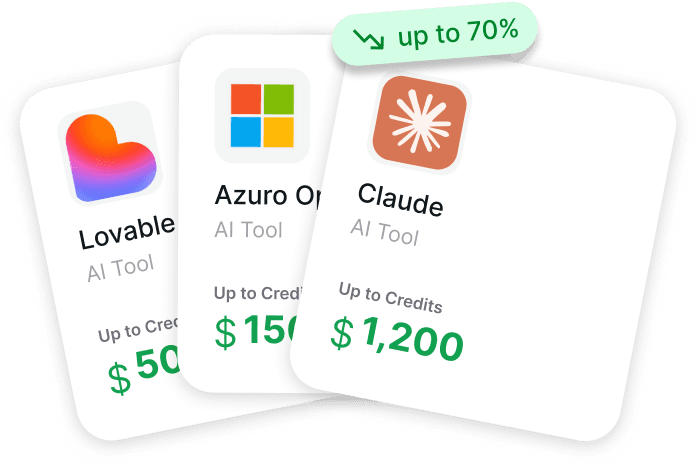
Get AI Perks aggregates free AI credits and partner discounts from providers such as Cursor, Lovable, OpenAI, Anthropic, and hundreds of other products. These credits can be applied to real usage, whether that means refactoring code within Cursor or iterating on Lovable prototypes through multiple design and logic changes.
Instead of searching through accelerator programs, partner pages, or time-limited offers, everything is in one place. Get AI Perks curates perks from providers like OpenAI, Anthropic, Cursor, Lovable, and hundreds of others, and guides you step-by-step through activation so the credits actually work. No guesswork, no hidden conditions.

How Cursor and Lovable Fit Into a Real Workflow
Although Cursor and Lovable are often framed as competitors, they are better understood as tools designed for different stages of the same process. The differences become clearer when you look at how teams move from ideas to production.
1. Prototyping vs Production Is The Real Distinction
Cursor and Lovable address different moments in the lifecycle of a product, not the same problem from different angles.
Lovable Focuses on Clarity
Lovable compresses the time between idea and feedback. It helps teams quickly understand whether an idea is worth pursuing by turning abstract concepts into something concrete and testable.
Cursor Focuses on Execution
Cursor compresses the time between decision and implementation. Once direction is set, it helps teams build, refactor, and maintain real software faster without leaving the development environment.
Why Some Teams Use Both
Some teams prototype in Lovable and then move to Cursor for production work. This approach can work well, but only when the handoff is intentional and expectations are realistic about what carries over and what needs to be rebuilt.

2. Collaboration Styles Compared
The way teams collaborate often determines which tool feels more natural.
Lovable’s Visual Collaboration
Lovable enables real-time, visual collaboration for mixed-skill teams. Everyone sees changes as they happen, which keeps discussions grounded in shared context.
Cursor’s Developer-Native Workflows
Cursor relies on Git-based collaboration. Code reviews, branches, and pull requests remain central to how teams work together.
3. Ownership and Portability Considerations
Both tools allow teams to retain ownership of their output, but the experience differs.
Lovable’s Generated Code
Lovable allows you to export and extend generated code, but understanding its structure can take time for developers who were not involved in the initial build.
Cursor’s Direct Control
Cursor works directly on your codebase from day one. There is no abstraction layer, but also no safety net.
The tradeoff is speed now versus control later.
Pricing and How Costs Scale in Practice
Cursor and Lovable both offer free entry points, but their pricing models reflect very different assumptions about how teams work. Understanding those differences matters more than the headline prices.
Cursor Pricing Breakdown
Cursor uses a usage-based model layered on top of plan tiers. You are not just paying for access, but for how much AI assistance your team actually consumes.
Individual Plans
- Hobby (Free). A no-cost entry tier with limited agent requests and tab completions. Useful for testing the editor and basic AI assistance, but not designed for sustained daily work.
- Pro ($20 per month). Removes most friction for individual developers. Includes unlimited tab completions, extended agent usage, cloud agents, and larger context windows. This is where Cursor becomes practical for real development.
- Pro+ ($60 per month). Expands usage limits significantly, offering roughly 3x usage across major models like OpenAI, Claude, and Gemini. Best suited for developers who rely heavily on AI for refactoring and larger tasks.
- Ultra ($200 per month). Designed for power users. Provides very high usage limits, priority feature access, and support for teams that treat AI as a core part of daily development.
Team and Enterprise Plans
- Teams ($40 per user per month). Adds shared usage pools, centralized billing, analytics, role-based access control, and SSO. Suitable for engineering teams that need visibility and cost controls.
- Enterprise (Custom pricing). Focuses on governance and compliance, including pooled usage, audit logs, SCIM seat management, invoice billing, and advanced admin controls.
How Cursor Costs Behave Over Time
Cursor’s pricing rewards active use. Teams that consistently rely on AI for refactoring, code review, and automation often see strong value. However, costs can rise if usage is not monitored, especially when agents are used heavily across large codebases.
Lovable Pricing Breakdown
Lovable uses a credit-based system, where AI actions consume credits rather than tokens or usage units. Pricing is shared across users, which makes it easier to predict costs for collaborative teams.

Core Plans
- Free ($0 per month). Includes 5 daily credits, public projects, unlimited collaborators, and basic cloud hosting. This plan is ideal for exploring ideas or creating simple demos without commitment.
- Pro ($25 per month). Designed for fast-moving teams. Offers a base of monthly credits plus daily top-ups, credit rollovers, custom domains, private projects, and basic role management.
- Business ($50 per month). Adds internal publishing, SSO, team workspaces, personal projects, and design templates. This tier fits growing teams that need more control and structure.
- Enterprise (Custom pricing). Targets larger organizations with requirements around onboarding, governance, audit logs, SCIM, and custom integrations.
How Lovable Costs Behave Over Time
Lovable’s pricing is predictable for exploration and early-stage work. Credits encourage intentional iteration, but heavy debugging or repeated regeneration can drain credits faster than expected. Costs are easier to plan for than usage-based models, but less forgiving during trial-and-error phases.

How Lovable and Cursor Differ in Real Use
Both tools rely on AI, but they are designed for very different moments in the building process. Understanding where each one excels and where it starts to strain makes the comparison much clearer.
What Lovable Is Designed to Do Well
By early 2026, it is more accurate to describe Lovable as a full-stack builder, not just a tool for visual prototypes. It can still move incredibly fast on interface and layout, but it has grown into something broader: generating database logic, handling authentication, and supporting payments, all from the same prompt-driven workflow. In other words, it can take you beyond a clickable demo and into a working app skeleton that has real moving parts.
Turning Ideas Into Something Visible
Lovable’s biggest strength is still speed to visibility. Instead of debating requirements or sketching wireframes that only partially explain an idea, it generates something interactive quickly. Being able to click through a real interface often unblocks decisions that would otherwise drag on.
Removing Early Setup Friction
Lovable reduces the usual setup tax. Hosting and previews are handled automatically, and the platform can now generate more of the underlying structure too, including database logic and basic auth flows. That means early-stage teams can test an idea without stitching together five separate tools just to get to “something real.”
Supporting Non-Technical Collaboration
Lovable is built for mixed-skill teams. Designers, founders, and marketers can work in the same environment without touching code, while technical teammates can step in when deeper control is needed. Updates show up immediately, which keeps conversations grounded in what the product actually does, not what someone hopes it will do.
Extending Beyond Front-End Into Full-Stack Builds
This is the part many comparisons miss. Lovable is no longer limited to “UI-first” work. It can generate and connect key full-stack pieces like database logic, authentication, and payments, which changes how far teams can realistically go before needing a traditional engineering handoff. It is still fastest at early builds, but the ceiling is higher than “prototype” now.

Where Lovable Reaches Its Limits
The same traits that make Lovable fast also create constraints as projects grow.
Debugging and Iteration Costs
AI-generated output can behave unpredictably. Fixing one issue may introduce another, and repeated attempts consume credits. Over time, experimentation can feel more expensive than expected.
Limited Infrastructure Control
Lovable abstracts away infrastructure, which helps early on but becomes restrictive later. Advanced scaling, performance tuning, and custom authentication usually require exporting code and moving to another environment.
Best Suited for Prototypes, Not Operations
Lovable excels at showing what a product could look like. It is less reliable for running complex, data-heavy systems that need fine-grained control and long-term stability.
What Cursor Is Built to Optimize
Cursor assumes you are already working inside a real codebase. Its focus is on improving execution rather than defining the product.
Staying in Flow While Coding
Cursor embeds AI directly into the editor. You can ask questions, refactor code, or apply changes without switching tools. Reducing context switching adds up quickly during daily development.
Understanding Projects, Not Just Files
Unlike basic autocomplete tools, Cursor understands relationships across your repository. This makes it useful for larger refactors, multi-file updates, and navigating unfamiliar or growing codebases.
Supporting Developer Responsibility
Cursor does not remove human oversight. Developers still review, test, and decide. The AI accelerates execution, but ownership remains firmly with the team.
Where Cursor Requires More Investment
Cursor’s power comes with expectations and tradeoffs.
Developer-First by Design
Cursor assumes technical knowledge. Non-technical users will struggle to extract value, and even developers need time to adjust workflows and learn advanced features.
Usage-Based Cost Awareness
Pricing scales with AI usage rather than seats. Heavy refactors or frequent agent use can increase costs if usage is not monitored carefully.
Less Helpful for Early Ambiguity
When direction is unclear, a smarter editor does not solve the problem. Cursor shines once decisions are made and execution becomes the priority.
Common Use Cases and Tool Fit
| Use Case | Lovable | Cursor |
| Early-stage idea validation | Best fit for turning ideas into clickable prototypes quickly | Limited value before code or direction exists |
| Client demos and pitch-ready prototypes | Strong choice for visual demos and early presentations | Not designed for demos or visual prototyping |
| Non-technical teams needing fast feedback | Works well for founders, designers, and marketers | Requires technical knowledge to be useful |
| Active development and refactoring | Not suited for ongoing code maintenance | Designed specifically for refactoring and iteration |
| Growing or complex codebases | Becomes restrictive as complexity increases | Handles multi-file and large codebases well |
| Engineering-led teams focused on shipping | Better as a starting point, not a production tool | Strong fit for teams shipping and maintaining software |
| Full lifecycle expectations | Breaks down when pushed beyond prototyping | Breaks down when used for ideation or discovery |
Final Thoughts
Cursor and Lovable are not rivals. They are instruments tuned for different parts of the same process.
Lovable helps you see an idea clearly before committing resources. Cursor helps you commit without slowing down. Both are valuable when used for what they were designed to do.
The real mistake is not choosing the wrong tool. It is expecting one tool to solve problems it was never meant to handle.
Frequently Asked Questions
What is the main difference between Cursor and Lovable?
The main difference is where each tool fits in the workflow. Lovable is built for early-stage prototyping and idea validation, turning plain-language descriptions into interactive UIs. Cursor is built for developers working with real codebases, helping them refactor, debug, and ship code faster inside an editor.
Can Cursor and Lovable be used together?
Yes. Some teams use Lovable to prototype ideas quickly and gather feedback, then move to Cursor once development starts. This works best when the handoff is intentional and teams understand that not everything generated in Lovable is meant to carry directly into production.
Is Lovable a no-code replacement for developers?
No. Lovable reduces the need for developers early on, but it does not replace them. Its strength is speed and visibility, not long-term architecture or infrastructure control. Most production systems still require developer involvement.
Is Cursor useful for non-technical users?
Not really. Cursor assumes familiarity with code, repositories, and development workflows. Non-technical users may find it difficult to extract value without developer support.
Which tool is better for startups?
It depends on the stage. Early-stage startups validating ideas or preparing demos often benefit more from Lovable. Startups that already have a product and are actively developing or scaling it usually get more value from Cursor.