Most startup founders don’t struggle with ideas. They struggle with structure. You know what you want to build, but when it’s time to put it on paper for investors, partners, or even your own team, things get fuzzy fast.
A good business plan template doesn’t magically make your startup fundable. What it does is force clarity. It helps you slow down in the right places, answer uncomfortable questions early, and present your thinking in a way others can follow. The best template for your startup depends less on trends and more on where you are right now and what you’re trying to achieve.

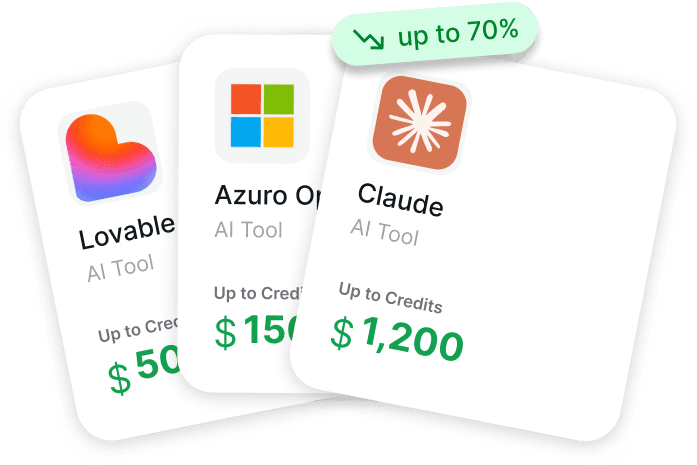
How Get AI Perks Helps Startups Access Free AI Credits
At Get AI Perks, we built the platform around a simple idea: founders should not have to burn their budget just to experiment with modern AI tools. Many of the best products offer free credits, but finding them, qualifying for them, and activating them often takes more time than it is worth. We bring all of that into one place.
Get AI Perks aggregates free AI credits and discounts from a wide range of providers and clearly shows what each perk includes, what conditions apply, and how likely a startup is to be approved. This allows founders to make informed decisions before spending time on applications or onboarding steps.
By simplifying access to free AI credits, the platform gives early-stage teams more room to experiment, build prototypes, and validate ideas using real tools rather than limited trials. For startups working with tight budgets, this makes it easier to test assumptions, move faster, and allocate resources more effectively from the start.
What a Startup Business Plan Template Is Actually For
A startup business plan template is not about formatting or filling boxes. Its real job is to guide decisions. A good template helps you answer uncomfortable questions early, organize your thinking, and communicate your logic clearly to others.
For founders, a business plan usually serves three audiences. Sometimes it is for yourself, to make sense of the idea. Sometimes it is for mentors or accelerators, to show that your thinking is structured. And sometimes it is for investors or lenders, who want evidence that the business can work and scale.
The mistake many founders make is using a template designed for one audience and stage, while aiming it at another. A detailed 40-page plan is often useless at the idea stage. A one-page canvas is usually not enough for due diligence. The template should match the decision being made, not just the business itself.
Why Startup Stage Matters More Than Template Popularity
Many articles list the best templates by brand or tool. That is rarely helpful. A popular template is not automatically a good fit for your startup.
The more important question is where you are in the journey. Are you still testing assumptions? Are you preparing for an accelerator interview? Are you raising capital? Or are you already operating and scaling?
Each stage demands a different balance between speed, depth, and precision. Early on, speed and clarity matter more than polish. Later, depth and defensibility matter more than simplicity. The best business plan template evolves with those needs.
Idea Stage: When You Are Testing Whether the Idea Is Worth Pursuing
At the idea stage, the biggest risk is not execution. It is building something nobody actually needs. At this point, your business plan should not try to predict five years of growth or impress investors. Its job is simpler and harder at the same time – to force clarity.
The right template at this stage helps you test assumptions quickly. It keeps you honest about what you know, what you are guessing, and what must be true for the idea to work at all.
Best Template Type: Lean or One-Page Business Plan
Lean and one-page business plan templates are built for speed and focus. They remove anything that does not directly support understanding the core business logic.

A Strong Lean Template Usually Covers
- The problem you are solving
- Your proposed solution
- Target customers
- Value proposition
- Key assumptions that must be true
- Early success metrics
- Basic cost and revenue logic
The value of these templates is not completeness. It is clarity. If you cannot explain your business on one page at this stage, you probably do not understand it well enough yet.
When This Template Works Best
Lean and one-page templates are ideal for:
- First-time founders
- Idea validation
- Early mentor conversations
- Hackathons and startup weekends
- Deciding whether to move forward or pivot
When to Move On
Once you start getting real feedback from users, or once external stakeholders ask deeper questions about market size, competition, or financial viability, the lean template stops being enough. That is your signal to move to a more structured format.
Pre-Seed and Accelerator Stage: When Structure Starts to Matter
At the pre-seed stage, your idea is no longer hypothetical. You may have an MVP, early users, pilot customers, or at least meaningful market research. People now expect you to show not just what you want to build, but how the business could realistically work.
Your business plan template should still be concise, but it must show coherence across problem, market, product, and execution.
Best Template Type: Guided or Fill-in-the-Blank Startup Plan
Guided templates are especially useful here. They walk you through each section step by step, helping you avoid blind spots without forcing investor-level depth too early.
A Good Guided Startup Business Plan Template Typically Includes
- Problem and solution explained in more detail
- Target market definition and segmentation
- Competitive landscape overview
- Go-to-market approach
- Early traction or validation signals
- Revenue model explanation
- High-level financial assumptions
- Team and execution plan
- Risks and mitigation ideas
The strength of these templates is not that they are perfect. It is that they force you to answer questions you might otherwise postpone.
Why This Stage Needs More Than a One-Pager
Accelerators, mentors, and early investors are looking for internal logic. They want to see that your idea, market opportunity, and execution plan fit together. A guided template helps you present that logic clearly without overwhelming the reader.
Seed Stage: When Investors Expect Depth and Evidence
When you prepare for a seed round, the business plan becomes more than a thinking tool. It turns into a document that supports due diligence, investor confidence, and sometimes legal or financial review.
At this stage, completeness matters. Investors may not read every line, but they expect the thinking to exist behind the numbers.
Best Template Type: Traditional Startup Business Plan
The classic startup business plan still has a place here. A strong traditional template usually includes:
- Executive summary
- Company overview and mission
- Market analysis supported by data
- Customer personas and use cases
- Competitive analysis and differentiation
- Product or service description
- Go-to-market and sales strategy
- Business model and pricing
- Financial projections with assumptions
- Funding ask and use of funds
- Risks, dependencies, and contingencies
- Team and operational plan
At this stage, the plan should not only explain what you are building, but why your startup can realistically win.

What Investors Actually Look For
Despite appearances, investors are not looking for perfect forecasts. They are looking for:
- Clear understanding of the market
- Realistic assumptions
- Awareness of competition
- Logical path to growth
- Evidence of traction or learning
- Thoughtful use of capital
The right template helps you show this thinking without hiding behind jargon or inflated numbers.
Growth Stage: When the Business Plan Becomes an Operating Tool
After funding, the role of the business plan changes again. It is no longer primarily about convincing outsiders. It becomes a living document used to align teams, track progress, and manage complexity.
Best Template Type: Strategic or Operating Plan Template
Growth-stage templates focus less on validation and more on execution. They translate strategy into actionable plans.
These Templates Often Include
- Clear long-term vision
- Near-term goals and milestones
- Product roadmap
- Hiring plan
- Market expansion strategy
- Operational processes
- Budget allocation and KPI tracking
- Scenario planning
The value here is alignment. A good operating plan reduces confusion and prevents teams from pulling in different directions.
Why Old Templates Stop Working
Traditional investor-focused plans tend to be static. Growth-stage startups need flexibility. Templates that support regular updates, progress tracking, and scenario adjustments are far more effective than long narrative documents.
Special Case: Internal Business Plans for Team Alignment
Not every business plan is meant for investors. Many startups benefit from internal plans that clarify priorities and expectations without formal language.
Best Template Type: Internal Planning or Execution Template
Internal business plan templates are practical and direct. They focus on:
- Team goals
- Responsibilities
- Execution timelines
- Resource allocation
- Metrics and accountability
The tone can be straightforward. The goal is not persuasion, but shared understanding and execution clarity.
How to Choose the Right Business Plan Template for Your Startup
Choosing the right template is less about tools and more about intent. Before selecting one, ask yourself a few honest questions.
What Decision Is This Plan Supporting?
Are you deciding whether to pursue an idea? Applying to an accelerator? Raising capital? Aligning a team? Each decision requires a different level of detail.
Who Is the Primary Reader?
A mentor, an investor, a bank, or your team will all read the same document differently. The best template respects the reader’s expectations.
How Often Will This Plan Change?
If the plan will evolve weekly, avoid rigid formats. If it supports a funding process, structure matters more.
What Level of Evidence Do You Have?
Templates that demand detailed projections are dangerous if you lack data. Choose a format that matches your evidence, not your ambition.

Common Mistakes Founders Make with Business Plan Templates
Even strong templates can fail if they are used the wrong way. These are some of the most common issues founders run into:
- Treating the template as a form. Filling in sections without real thinking turns the plan into noise. A template is meant to guide your thinking, not replace it.
- Overbuilding too early. Long, detailed plans created too soon slow learning and create the illusion of certainty where none exists.
- Copying investor language too soon. Trying to sound impressive often makes the plan harder to understand. Clear thinking matters more than polished wording.
- Never updating the plan. A business plan should change as the business changes. A static document quickly loses relevance once reality starts to shift.
Final Thoughts: The Best Template Is the One You Actually Use Well
There is no universal best business plan template for startups. There is only the best template for your stage, your audience, and your next decision.
A good template saves time, reduces blind spots, and forces clarity. A bad one creates false confidence or unnecessary work. The difference lies not in branding or popularity, but in fit.
Choose the template that helps you think better right now. When your startup changes, change the template too. That flexibility, more than any format, is what sets strong founders apart.
FAQ
What is the best business plan template for a startup?
There is no single best template for every startup. The right business plan template depends on your stage and purpose. Early-stage founders usually benefit from a lean or one-page template, while startups preparing for funding or formal review need a more structured, traditional plan.
Should startups start with a one-page business plan?
Yes, in most cases. A one-page business plan helps founders clarify the core idea without getting lost in details too early. It is especially useful for idea validation, early feedback, and internal alignment before committing to a longer document.
When should a startup switch to a full business plan?
A startup should move to a full business plan when external stakeholders start asking for deeper detail. This often happens during pre-seed or seed fundraising, accelerator applications, or loan discussions. The signal is usually the need to explain market size, competition, and financial assumptions more clearly.
Do investors actually read business plans?
Not always line by line, but they do expect the thinking to exist. Investors often scan for logic, assumptions, and consistency rather than reading every paragraph. A well-structured plan supports due diligence and makes conversations more productive.
How detailed should financial projections be in a startup business plan?
Financial projections should match your level of evidence. Early-stage startups should focus on assumptions, unit economics, and learning milestones rather than long-term forecasts. Detailed multi-year projections make more sense once there is real traction and historical data.